
Can Extracellular Vesicles Unlock New Avenues for Treating Youth-Onset Type 2 Diabetes?
Research Information
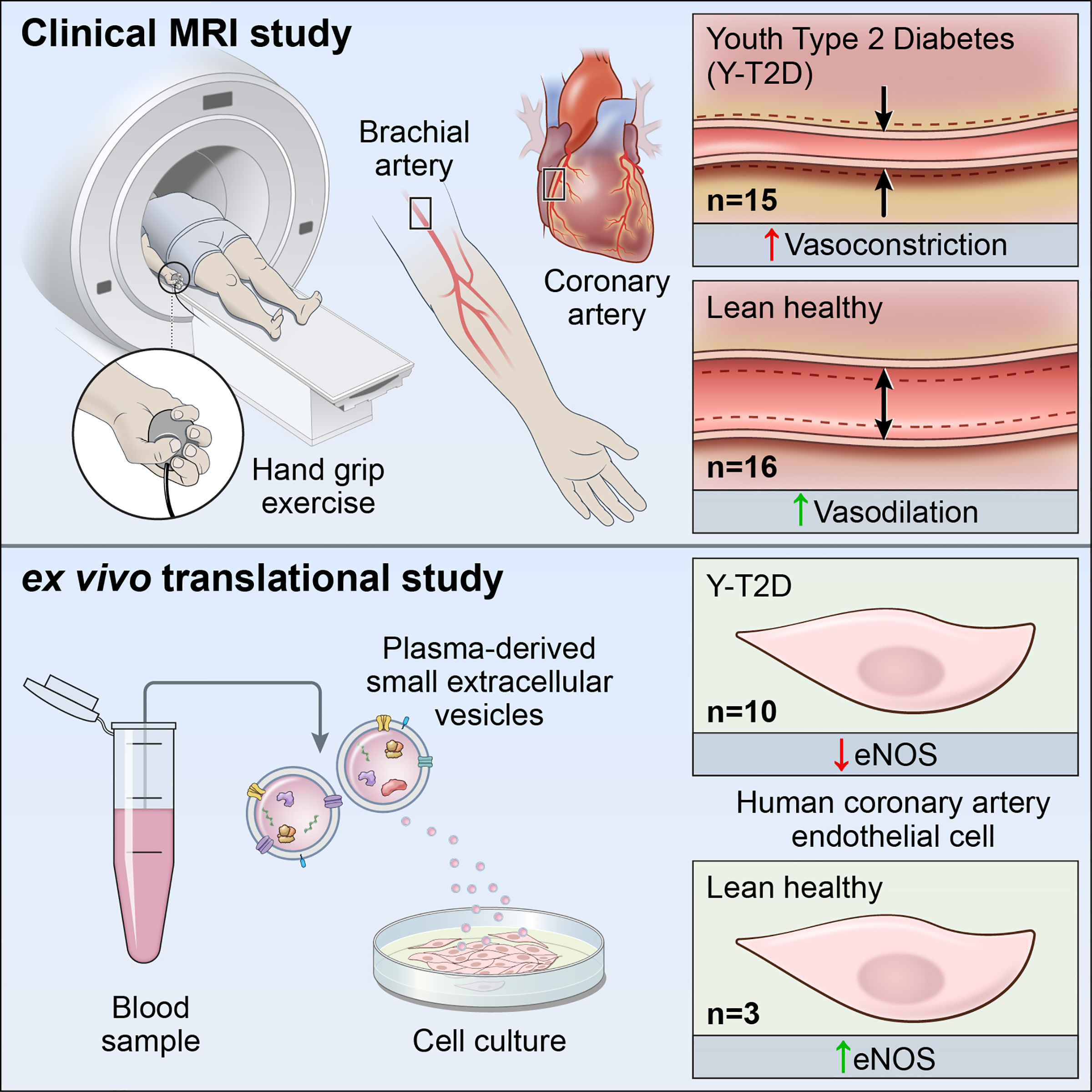
Youth-Onset Type 2 Diabetes (Y-T2D) is increasingly recognized as a critical public health challenge, with patients facing accelerated cardiovascular risks at an early age. A groundbreaking study published in Circulation Research explores the role of small extracellular vesicles (sEVs) derived from plasma in mediating endothelial dysfunction and their correlation with subclinical coronary atherosclerosis in Y-T2D patients as shown in the image abstract.

Key Findings
1. Markers of Endothelial Dysfunction
- Plasma-derived sEVs from Y-T2D patients were shown to significantly decrease phosphorylated endothelial nitric oxide synthase (peNOS) levels, impairing nitric oxide (NO) production.
- At the same time, these sEVs increased intercellular adhesion molecule-1 (ICAM-1) expression, fostering inflammation by promoting leukocyte adhesion to endothelial cells.

2. Accelerated Subclinical Coronary Atherosclerosis
- Subclinical coronary atherosclerosis, characterized by silent plaque buildup in coronary arteries, was identified as an early feature in Y-T2D.
- The study reveals that sEVs from Y-T2D patients amplify inflammatory and oxidative stress pathways in endothelial cells, making them more vulnerable to plaque formation.
3. Comparisons Across Groups
• sEVs from healthy donors (HVs) had minimal impact, preserving endothelial function.
• While sEVs from adult-onset T2D (A-T2D) patients also contributed to endothelial dysfunction, the effects were significantly more severe in Y-T2D, indicating early vascular aging and greater cardiovascular vulnerability in younger patients.
Implications for Therapy
This study underscores the role of sEVs as both biomarkers and therapeutic targets in Y-T2D. By targeting sEV-mediated pathways, researchers could develop innovative strategies to restore NO production, reduce inflammation, and prevent cardiovascular complications in this vulnerable population.
Learn more about this study: https://www.ahajournals.org/doi/10.1161/CIRCRESAHA.124.324272